
Style Guide
Tropical garden design is strongest when richness still feels controlled
Tropical garden design appeals to people who want a more immersive, relaxed, and lush outdoor atmosphere. The challenge is that dense planting can quickly become visual noise if the structure underneath is weak.
Tropical style is attractive because it promises escape. It softens edges, increases enclosure, and makes a garden feel more immersive. But lushness without order can become clutter very quickly. The goal is not simply to add more leaf mass. The goal is to create a stronger atmosphere while keeping the space readable.
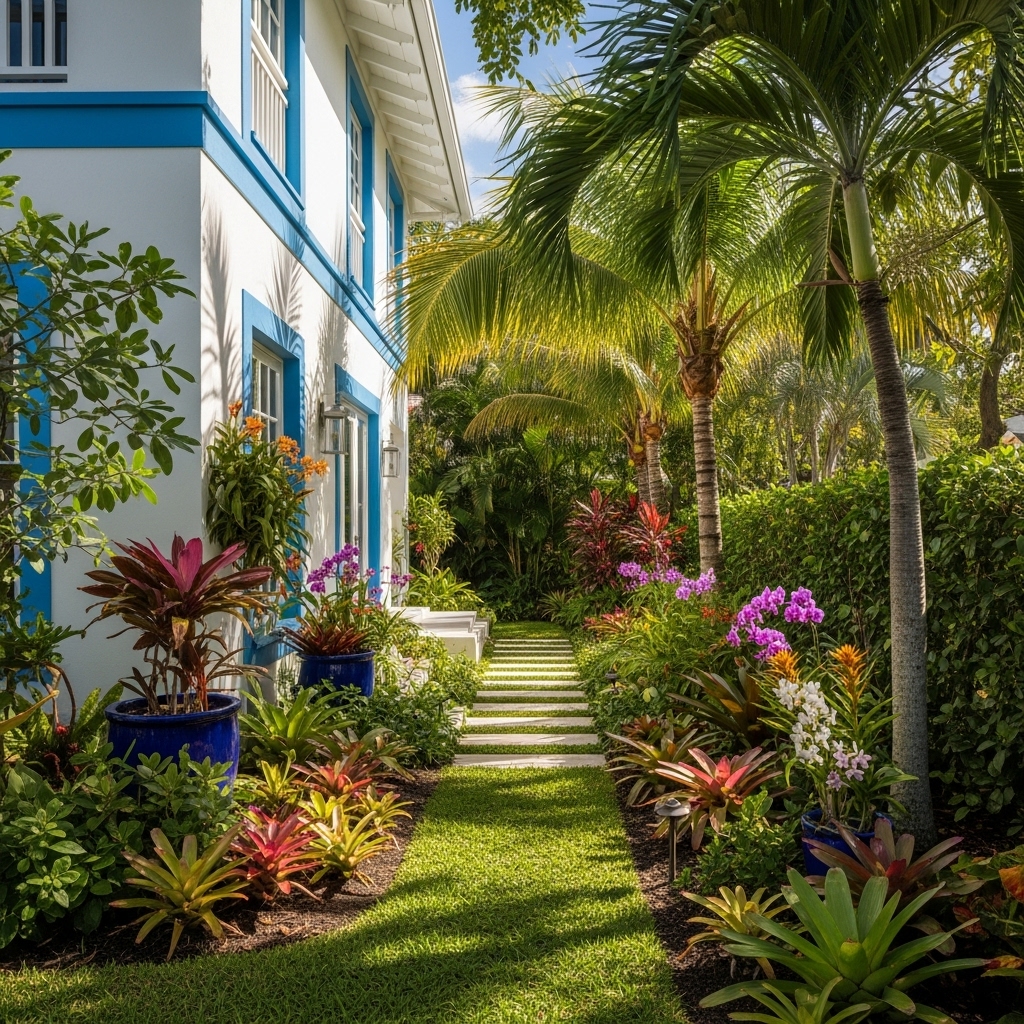
What usually creates the tropical feel
- Bolder foliage forms
- More layered planting depth
- Softer edges and stronger enclosure
- A warmer, resort-like mood
Much of the tropical effect comes from rhythm and scale. Larger foliage shapes change the visual texture of the whole garden. Layering creates depth. Slightly looser boundaries make the space feel less rigid. Together those qualities create the emotional shift people want.
Where the style goes wrong
The most common mistake is treating tropical as a license to add everything. Without hierarchy, a lush garden becomes chaotic. Paths disappear, seating loses clarity, and the garden stops feeling intentional.
Another mistake is forcing the style where the structure does not support it. If there is no clear route, no anchor zone, and no control over how dense planting should become, the tropical direction can swallow the garden instead of improving it.
How to make it work
Use one strong structural idea first, then let the planting intensify around it. That keeps the space legible while still giving it the richness people usually want from this style.
A terrace edge, a pool line, a seating zone, or one strong circulation path can do a lot of stabilizing work. Once that structural clarity exists, tropical planting can become more generous without the space collapsing into confusion.
Texture matters as much as color
People often think tropical design is mainly about vibrant color, but texture is just as important. Large leaves, layered foliage, and shifts between coarse and fine material create the immersive effect even when the palette stays relatively restrained.
Think about maintenance honestly
Lusher planting often means more growth, more pruning, more cleanup, and more irrigation attention. That does not mean the style is a bad choice. It means the maintenance rhythm needs to match the way the garden will actually be cared for.
Good tropical design still needs open space
Paradoxically, the tropical feeling becomes stronger when it has some contrast. Small areas of open terrace, clear path moments, and breathing space around seating help the dense planting feel more dramatic rather than simply overcrowded.