
Garden Makeover Guide
How to plan a garden makeover without getting overwhelmed
Most garden makeovers fail before they begin because people try to solve everything at once. They think about planting, seating, shade, paving, borders, lighting, and budget all in the same mental pile. The better approach is to sequence the decisions so each one becomes easier.
When people say they want a full garden makeover, they often mean several different things at the same time. They may want the space to look more polished, feel more private, require less maintenance, and become better for hosting people. The trouble is that those goals do not always lead to the same design decisions. A lower-maintenance garden may need fewer plant varieties. A better entertaining space may need more hardscape and more shade. A more private garden may need denser edges and taller structure. If all of those aims are mixed together without order, the project turns into confusion quickly.
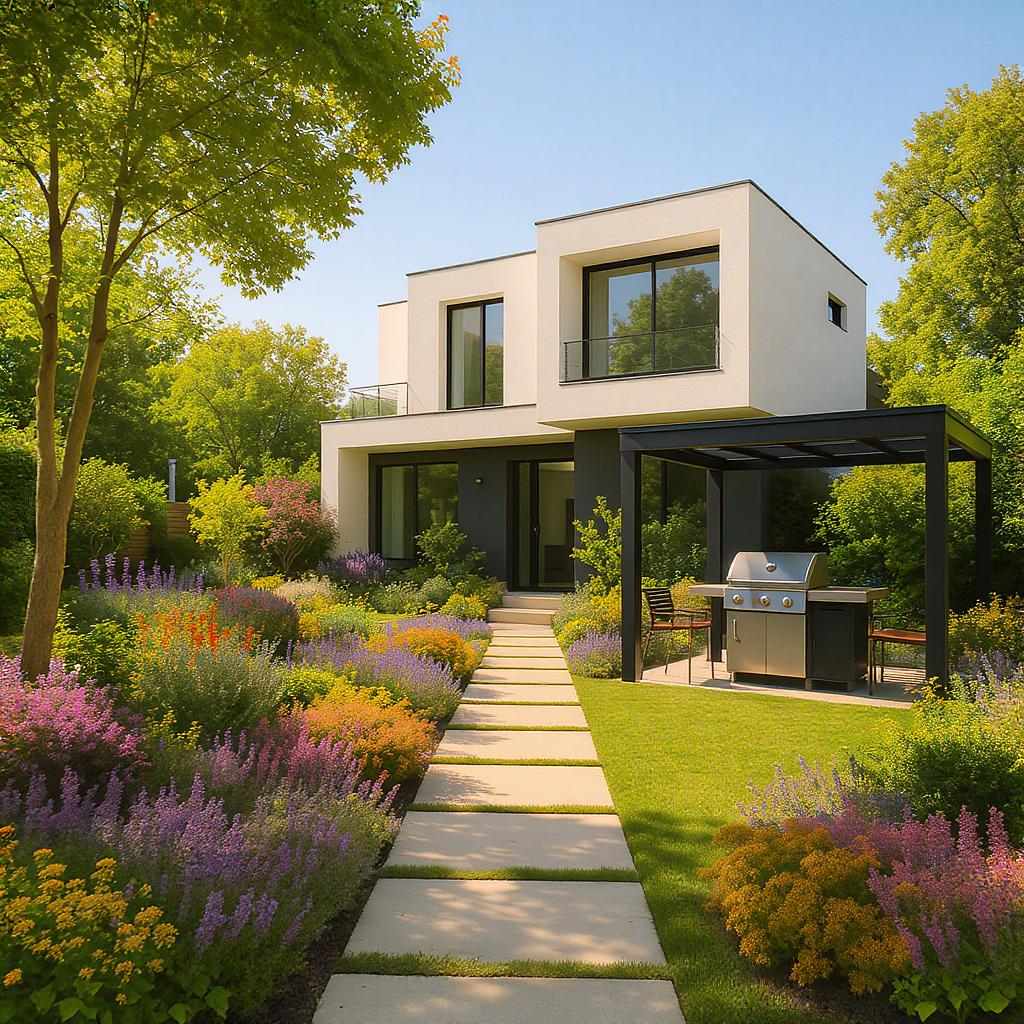
Start with how the garden needs to function
Before choosing a style, decide what the space must do. Is it mainly for entertaining? Quiet morning coffee? Family use? Better curb appeal? A garden that supports the wrong use will still feel wrong even if it looks expensive.
A useful test is to write one primary use and two secondary uses. For example:
- Primary use: relaxed evening seating
- Secondary use: occasional dining
- Secondary use: low-maintenance year-round structure
That kind of ranking forces tradeoffs early. If evening seating is the priority, then shade, circulation, lighting, and enclosure matter more than adding a long list of decorative features. If family activity is the priority, then open lawn, sightlines, and durable materials may matter more than intricate planting beds.
Fix layout before decoration
A makeover usually improves when circulation becomes clearer. Think about where people enter, where they pause, and which views matter most. Paths, edges, and zones create order. Planting and furniture should reinforce that order, not hide the fact that it is missing.
- Define one main focal zone
- Reduce awkward leftover corners
- Make movement through the space feel obvious
- Keep seating connected to the best light or shade
Most weak gardens are not weak because every individual part is wrong. They are weak because the parts do not relate to one another. A nice table placed in a circulation route will still feel awkward. A beautiful border planted against a confusing path layout will still feel unresolved. Good layout creates confidence. Once the layout makes sense, the garden becomes much easier to improve with planting and material changes.
Choose a style only after the structure is clear
Many people choose a style too early. Modern, cottage, tropical, or Zen can all work, but only if they fit the structure of the site. Style should sharpen the garden, not distract from weak planning.
This is one of the most common traps in garden makeovers. Someone falls in love with a mood image online and then starts trying to copy the visible details without checking whether the structure underneath is comparable. A narrow, shaded side yard will not behave like a large sunny backyard. A house with a crisp contemporary facade may not benefit from a planting style that feels loose and nostalgic. Style should come out of the site conditions and the intended use, not override them.
Spend budget where it changes the whole read of the space
The biggest visual shifts usually come from better layout, stronger edges, cleaner paving, and a clearer planting strategy. Decorative details matter less if the overall composition still feels unresolved.
People often underestimate how powerful simplification can be. Reworking a path, clarifying a bed line, removing weak furniture, or consolidating a planting palette can change the entire feeling of the garden more than adding another decorative object. If the budget is limited, prioritize moves that affect the whole composition:
- Cleaner path or terrace geometry
- More intentional transitions between lawn and planting
- A stronger shade element where people actually sit
- Planting that reads in larger masses instead of scattered singles
Use restraint
A good garden makeover usually involves removing confusion, not just adding more objects. If everything is a feature, nothing reads as special.
Restraint matters because gardens are read slowly. Unlike an interior room, an outdoor space changes with weather, growth, season, and movement. Too many competing materials or features can make the site feel busy for years. A more selective garden often feels more expensive because the visual hierarchy is clearer.
Think seasonally, not only instantly
A makeover should not only look good in the first week after installation. Think about what happens in different seasons. Will planting collapse in winter? Will a sunny terrace become unusable in summer? Will a deciduous canopy create a beautiful shift through the year or expose something you would rather hide? A durable garden is planned across time, not only around reveal-day impact.
Maintenance is part of design quality
People often treat maintenance as a practical issue that can be solved later, but it should shape early design choices. A garden that looks beautiful only when heavily maintained is not automatically a better garden. The stronger question is whether the effort required matches the way you actually live. A simpler planting scheme with strong form may outperform a richer one if it remains coherent under real-world care.
Take photos from more than one angle
If you are planning a makeover seriously, document the space well. One hero angle is useful, but it can hide difficult corners, awkward transitions, or weak side views. Photograph the garden from the house looking out, from the main entry looking in, and from the seating zone if one already exists. That gives you a more honest understanding of the project and makes future decisions more grounded.
Make one strong move first
Every successful makeover has at least one move that changes the entire reading of the space. Sometimes it is a path. Sometimes it is a tree. Sometimes it is a pergola or a terrace edge. If you can identify that one move, the rest of the garden becomes easier to organize around it. Without that move, projects often drift into incremental decorating instead of real improvement.
Final takeaway
A garden makeover becomes manageable when you stop trying to solve style, function, planting, materials, and budget all at the same time. Start with use. Fix layout. Choose style later. Spend on high-impact moves. Keep the composition calmer than your impulse tells you. That sequence creates far better results than rushing straight into features.